Prājāpatya‑Māna: The Prajāpati-Based System of Time Measurement in Hindu Cosmology
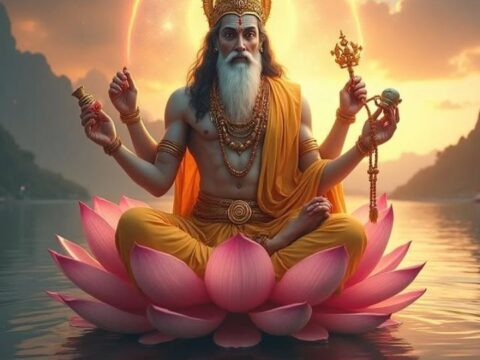
Prājāpatya‑māna (प्राजापत्यमान) refers to a classical system of time‑measurement associated with Prajāpati, the cosmic progenitor. While Purāṇic cosmology is dominated by the Brāhma‑māna (Brahmā‑based time scale), several texts also preserve an older, Vedic‑rooted framework in which Prajāpati is the regulator of time, especially through the cycles of muhūrtas, tithis, ṛtus, and saṃvatsaras. This article examines the meaning, structure, and philosophical significance of Prājāpatya‑māna, situating it within the broader evolution of Hindu time‑theory.
1. Introduction
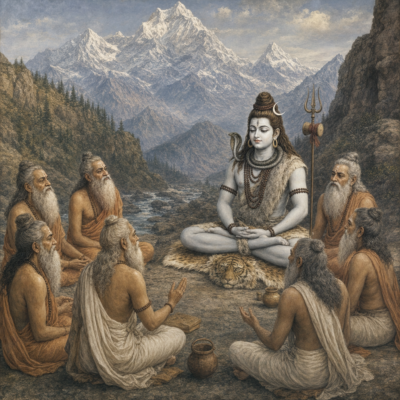 In Vedic literature, Prajāpati is not merely a deity but the personification of Time (Kāla) itself. The Śatapatha Brāhmaṇa repeatedly identifies Prajāpati with the year (saṃvatsara), the creator of days, and the lord of temporal cycles. From this arises the concept of Prājāpatya‑māna, the measurement of time according to Prajāpati.
This system predates the Purāṇic Brahmā‑centric cosmology and reflects an early attempt to understand cosmic order through the rhythms of nature.
2. Etymology
- Prajāpati — “Lord of creatures,” the Vedic creator‑principle
- Māna — measure, scale, quantification
Thus Prājāpatya‑māna = the time‑measure belonging to Prajāpati, or the temporal order established by him.
3. Scriptural Foundations
3.1 Prajāpati as Time
The Śatapatha Brāhmaṇa (11.1.6) states:
“Prajāpati is the Year.”
This identifies Prajāpati with the cycle of seasons, solar motion, and the unfolding of creation through time.
3.2 Prajāpati as the Creator of Days
Another Brāhmaṇa passage describes:
“From Prajāpati came the day and night.”
Thus, the basic units of time — day, night, month, season, year — are considered Prājāpatya.
4. Structure of Prājāpatya‑Māna
Unlike Brāhma‑māna, which deals with cosmic time (billions of years), Prājāpatya‑māna deals with ritual and natural time, the cycles governing human life and Vedic ritual.
4.1 The Day (Ahorātra)
Prajāpati is said to have created the day‑night cycle. A day is divided into:
- 30 muhūrta [Mo] where muhūrta = 48 minutes [(24×60 min) ÷ 30 = 48min]
- Total = 24 hours
This is the earliest standardized time division in Vedic culture. Muhūrta ruled by the Moon showing the span of the mind. 30 muhūrta of a day are mapped into 30 tithi of the lunar month.
4.2 The Month (Māsa) [Me]
A Prājāpatya month has two halves called pakṣa [Ve]
- Śukla pakṣa — waxing ◑
- Kṛṣṇa pakṣa — waning ◐
Each pakṣa = 15 tithi; Thus one month = 30 tithi
4.3 The Seasons (Ṛtu) [Ju]
Prajāpati is the lord of the six seasons:
- Vasanta
- Grīṣma
- Varṣā
- Śarad
- Hemanta
- Śiśira
These are explicitly called Prājāpatya divisions in the Brāhmaṇas.
4.4 The Year (Saṃvatsara) [Sa]
The year is the primary Prājāpatya unit. A Prājāpatya year consists of:
- 12 months
- 6 seasons
- 2 ayanas (uttarāyaṇa and dakṣiṇāyana) [Su]
The year is the body of Prajāpati, and all ritual timing is aligned with this cycle.
4.5 The Five-Year Cycle (Yuga of Prajāpati)
Before the Purāṇic four‑yuga system, the Vedic texts describe a five‑year yuga, called the Prājāpatya‑yuga.
It consists of:
- 5 solar years
- 62 lunar months
- Intercalary months (adhikamāsa) to harmonize solar and lunar cycles
This was the earliest Indian calendrical system.
5. Distinction Between Prājāpatya‑Māna and Brāhma‑Māna
| Aspect | Prājāpatya‑Māna | Brāhma‑Māna |
|---|---|---|
| Deity | Prajāpati (Vedic) | Brahmā (Purāṇic) |
| Scale | Human‑ritual time | Cosmic time |
| Units | Day, month, season, year | Kalpa, Manvantara, Mahā‑yuga |
| Purpose | Ritual timing, agricultural cycles | Cosmology, creation cycles |
| Antiquity | Older (Vedic) | Later (Purāṇic) |
Prājāpatya‑māna is thus the foundation upon which later cosmological systems were built.
6. Philosophical Significance
6.1 Time as the First Principle
In the Vedic worldview, Time precedes creation. Prajāpati, as Time, generates the universe through temporal unfolding.
6.2 Ritual Synchronization
Vedic ritual (yajña) must align with Prājāpatya time, because:
“Ritual is the body of Prajāpati.”
Thus, correct timing is metaphysically essential.
6.3 Harmony of Solar and Lunar Cycles
The Prājāpatya five‑year yuga represents an early scientific attempt to reconcile:
- Solar year
- Lunar month
- Seasonal drift
This shows a sophisticated understanding of astronomical cycles.
7. Legacy and Influence
The Prājāpatya‑māna system influenced:
- The Hindu lunisolar calendar
- The concept of adhikamāsa
- The structure of Vedic ritual timings
- The later Purāṇic cosmology (which expanded the scale)
Even today, Indian calendars retain the Prājāpatya divisions of tithi, pakṣa, māsa, ṛtu, and saṃvatsara.
8. Conclusion
Prājāpatya‑māna represents the earliest Indian science of time, rooted in the Vedic identification of Prajāpati with the Year. It is a system that harmonizes cosmic order, ritual precision, and astronomical observation. While later overshadowed by the grand Purāṇic cycles of Brāhma‑māna, the Prājāpatya framework remains the living backbone of Hindu calendrical and ritual practice.